
Trees for Shade, Flower, Fruit and Structure
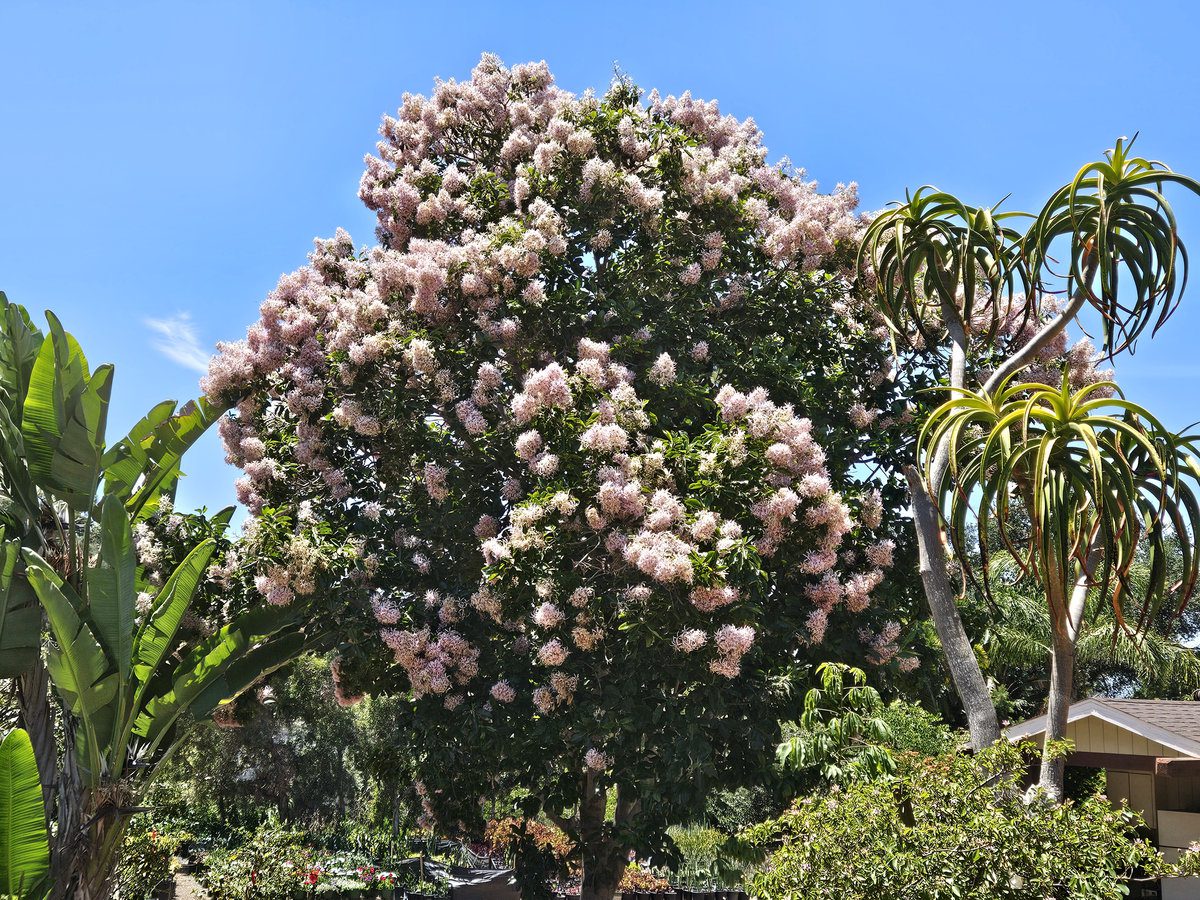
Trees are long-term investments in a landscape. They can provide shade, flowers, fruit, privacy, wildlife habitat, seasonal color and structure. For beginner gardeners, choosing a tree requires more planning than choosing a small bedding plant because the tree will grow over many years.
Before selecting a tree, consider mature height and width, root space, sun exposure, water needs, litter, nearby structures and the purpose of the tree. A tree that is beautiful in the nursery container may not be appropriate for every yard once mature.
Choosing by Purpose
• Shade and structure: Oaks, sycamores, Arbutus ‘Marina’, Chinese pistache and Tipuana tipu can provide canopy, structure, and cooling effects where space allows.
• Flowering trees: Pink trumpet tree, orchid tree, Cercis canadensis ‘Forest Pansy’, magnolia, jacaranda, crape myrtle and cassia can add seasonal bloom.
• Waterwise or Mediterranean style: Palo verde, olive and Arbutus ‘Marina’ can suit lower-water or Mediterranean-inspired landscapes when planted appropriately.
• Statement trees: Silk floss tree, botanically Ceiba speciosa, coral tree, and jacaranda can create bold visual impact.
• Fruit trees: Avocado, apple, peach, plum, persimmon, nectarine, pomegranate, fig, pluot, olive and pear trees can add edible value where conditions are suitable.
Correct Names to Know
Some trees are known by older or common names. Desert Museum Palo Verde is commonly written as Parkinsonia x ‘Desert Museum’. Silk floss tree is now commonly listed as Ceiba speciosa, though some gardeners may still know it as Chorisia speciosa. Crape myrtle is Lagerstroemia indica. Jacaranda is Jacaranda mimosifolia. Forest Pansy redbud is Cercis canadensis ‘Forest Pansy’.
Basic Tree Care
Plant trees at the correct depth, with the root flare near the soil surface. Dig a hole wider than the root ball, not excessively deep. Water deeply and consistently during establishment. Mulch around the root zone to conserve moisture, but keep mulch away from the trunk. Young trees may need staking only when necessary, and stakes should not be left on too long.
Common Beginner Mistakes
Common mistakes include planting too close to the house, choosing a tree that becomes too large, planting too deeply, watering only near the trunk instead of the root zone, and forgetting to consider overhead clearance. Trees should be chosen with the future landscape in mind.
A Long-Term Garden Decision
Trees can transform a property, but they should be selected carefully. Ask about mature size, growth rate, water needs, pruning and whether the tree is suitable for your location. Availability changes seasonally, so contact Ganter Nursery or stop by to see which trees are currently available.